What is the chronic care model? The Chronic Care Model is an evidence-based clinical framework that shifts outpatient medicine from reactive, episodic appointments to planned, proactive population health. It organizes care around six elements: health system organization, clinical information systems, delivery system design, decision support, self-management support, and community resources. Rather than outsourcing care management to disconnected third-party call centers, modern practices run Chronic Care Management (CCM) and Remote Physiologic Monitoring (RPM) in-house using automated phone documentation, care plan drafting, and EHR-linked time capture.
What Is the Chronic Care Model Definition?
The chronic care model definition describes an organizational system that shifts healthcare delivery from reactive, episodic acute visits to proactive, planned, and patient-centered management. Created by Dr. Edward Wagner and researchers at the MacColl Center for Health Care Innovation, it structures clinical operations around productive interactions between informed, engaged patients and prepared, proactive clinical teams.
Traditional Acute Care (Reactive) | Chronic Care Model (Proactive) |
|---|---|
• Wait for acute symptom flare | • Continuous monitoring & goals |
• 15-minute isolated visits | • Multidisciplinary care teams |
• Disconnected episodic notes | • Shared EHR care plans & tasks |
Most outpatient clinics were built around acute episodes: a patient develops sudden symptoms, books an appointment, and a physician treats the immediate problem.
Chronic conditions require a different approach. Illnesses like hypertension, diabetes, and heart failure require continuous oversight between office encounters. When a practice manages chronic conditions reactively, patients frequently bounce between emergency rooms and hurried 15-minute visits.
The chronic disease management model changes that workflow. It reorganizes practice routines so clinical staff track data trends, resolve care gaps before symptoms spike, and maintain regular contact with high-need patients between office appointments.
What Are the Six Chronic Care Model Elements?
The six chronic care model elements are health system organization, clinical information systems, delivery system design, decision support, self-management support, and community resources. Together, these six interdependent components form an operating structure. They supply clinical staff with the data, protected time, and community backing needed to manage long-term medical conditions safely.
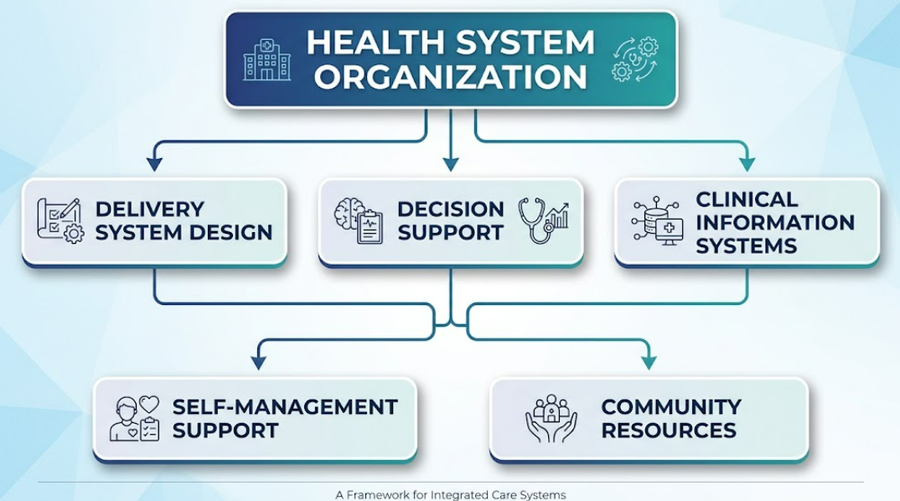
1. Health System Organization
Program success starts with practice leadership. Administrators and physician owners establish an operational culture where chronic disease prevention is valued alongside direct visit volume. This involves setting clear quality benchmarks, defining team accountability, and organizing billing workflows to fund ongoing care coordination.
2. Clinical Information Systems
Clinics cannot track population health through unorganized paper charts or siloed inbox messages. This pillar uses structured electronic health record (EHR) data and disease registries. These systems identify rising-risk patients, track overdue lab orders, flag unclosed care gaps, and notify staff when vitals cross defined clinical safety thresholds.
3. Delivery System Design
This element divides clinical labor across the practice. Physicians cannot handle all non-face-to-face chronic care coordination during brief in-person exams. Delivery system design introduces a team model where registered nurses (RNs), medical assistants (MAs), and care managers conduct scheduled check-ins, routine symptom assessments, and triage workflows.
4. Decision Support
Decision support integrates evidence-based clinical guidelines into daily clinic operations. Rather than relying on provider memory, care teams use standardized protocols, embedded EHR clinical alerts, and specialist-vetted care paths to guide medication titration, preventive screenings, and lab cadences.
5. Self-Management Support
Patients manage their chronic conditions outside the clinic every day. Self-management support helps patients take ownership of daily regimens. Clinicians guide patients to set attainable health goals, log blood pressure or blood sugar readings, spot warning signs early, and adopt realistic dietary habits.
6. Community Resources
Patient health depends heavily on life outside the clinic walls. This component links patients with local community programs, including non-emergency medical transportation, food assistance programs, senior fitness classes, and condition-specific support groups, to remove everyday barriers to care.
Chronic Care Model Element | Primary Operational Goal | Clinic Example |
|---|---|---|
Health System Organization | Establish executive leadership and value-focused care | Dedicating weekly staff hours strictly to care coordination |
Clinical Information Systems | Organize patient data and identify care gaps | Running EHR registries for uncontrolled diabetic patients |
Delivery System Design | Assign structured roles across the care team | Designating MAs and RNs to handle monthly follow-up calls |
Decision Support | Embed evidence-based protocols into practice | Implementing standardized medication titration guidelines |
Self-Management Support | Support patient daily self-management | Helping patients set weekly walking and sodium goals |
Community Resources | Connect patients with external local aid | Referring food-insecure patients to local nutrition programs |
Why Keep CCM and RPM In-House Instead of Outsourcing?
Keeping CCM and Remote Physiologic Monitoring (RPM) in-house preserves patient trust, maintains chart accuracy, and protects practice revenue. Outsourcing care management routes vulnerable patients to unfamiliar remote operators. This practice breaks care continuity, causes patient confusion, fragments medical records, and exposes clinics to Medicare billing audits.
Modern clinics run compliant care management programs in-house by removing manual documentation drag:
- Automated Call Documentation: An AI scribe drafts clinical notes directly from staff care-management calls, eliminating repetitive typing for nurses and care managers.
- Audit-Proof EHR Time Capture: Rather than relying on manual timers, care management time is captured directly from EHR activity, linking every billable minute to a specific clinical note, order, or referral.
- Automated Care Plan Drafting: Comprehensive care plans are automatically generated from chart history for clinical teams to review, edit, and approve in minutes.
- Dynamic Patient Task Extraction: Clinical action items are pulled directly from care plans, provider notes, and calls, with completed tasks flagged for provider review.
- Structured Patient Outreach: Automated voice outreach helps clinical staff contact, schedule, and engage rising-risk patients without expanding office headcount.
Removing administrative overhead allows existing clinic teams to oversee large patient panels while keeping clinical relationships inside the practice.
Frequently Asked Questions
What are the six elements of the chronic care model?
The six elements of the chronic care model are health system organization, clinical information systems, delivery system design, decision support, self-management support, and community resources. Together, they create an operational system where informed patients partner with proactive clinical teams to manage ongoing medical conditions.
Who created the chronic care model?
The Chronic Care Model was developed in the late 1990s by Dr. Edward H. Wagner and a research team at the MacColl Center for Health Care Innovation to improve outpatient management of chronic diseases.
How does the chronic care model differ from acute care?
Acute care focuses on rapid diagnosis and episodic treatment of sudden, short-term injuries or illnesses. The Chronic Care Model focuses on continuous health management, using planned check-ins, routine screenings, home vital tracking, and patient education to prevent acute hospital visits.
Can independent medical practices manage chronic care in-house?
Yes. Independent practices can run successful in-house chronic care programs without hiring extra staff by using workflow automation. Automated call charting, pre-drafted care plans, and EHR-linked time tracking allow current clinic staff to manage patient panels efficiently.
How do clinics track billable time for chronic care management?
Clinics track billable time by logging non-face-to-face staff minutes spent on care coordination each month. Compliant software captures time directly from verified EHR activities—such as telephone calls, lab reviews, specialist follow-ups, medication reconciliations, and care plan updates creating an audit-proof trail.
Understanding what is the chronic care model is the baseline for modern outpatient medicine. Putting its six core pillars into practice requires protecting your clinical staff from manual administrative fatigue. By automating call documentation, care plan drafting, and EHR time capture, your practice can run compliant, profitable CCM and RPM programs in-house, strengthening patient trust and expanding practice revenue.